When a wind squall snaps the top out of a Manitoba maple and drops it across a live driveway, the first call usually lands on a dispatcher’s screen with shaky voice notes and partial addresses. In that moment, the difference between a close call and a catastrophe is a team that can spin up fast, move safely, and make decisions under pressure. Rapid mobilization is not a slogan, it is a practiced workflow, tight coordination with utilities and municipalities, and a crew that has rehearsed the hard parts before the storm hits.
I have seen neighborhoods transformed by one hour of violent weather. Oak leaders twisted, cedars uprooted out of saturated soil, and a tangle of conductors humming through fresh leaves. The cleanups that go well have a few things in common. The property owner knew who to call, the company answering had a clear chain of command, and the field crew had the right mix of Certified Arborist Consultation, technical rigging, and street sense. This article lays out how a rapid mobilization Emergency Tree Services team actually operates, where the risks hide, and what choices you have before and after the truck pulls away.
What triggers a rapid response
Storms do not always give warning, yet patterns repeat. High wind events from 70 to 120 km/h snap co-dominant stems with old included bark. Early fall, a surprise wet snow catches leaves still on broadleaf crowns, adding thousands of pounds of load. Spring thaws saturate root plates and thin trees uproot in seemingly modest breezes. Human factors become accelerants, like unpermitted trenching that severs lateral roots on one side, or a recent driveway widening that raised soil over a trunk flare.
Calls concentrate around a few scenarios. A tree through a roof with potential occupant injury. A road blocked, preventing fire and ambulance access. A split leader over a primary distribution line, arcing or smoking. A leaning pine aimed at propane infrastructure. A massive limb trapped on a balcony, creeping down a centimeter per hour as fibers fail. Each carries its own hazards and dictates a different removal strategy.
The anatomy of a mobilization
Emergency Tree Services rely on a response model that borrows from incident command, adapted to the pace and complexity of urban forestry. The dispatcher is the nerve center, gathering cross streets, photo texts, and utility status, then assigning the nearest qualified team. The duty arborist, usually ISA Certified with several storm seasons behind them, triages the job on the way in, using wind data, outage maps, and municipal 311 advisories. On scene, the crew leader establishes a safe work zone and confirms utility isolation if wires are involved. That one step often determines whether the work is a controlled dismantle or a wait for line clearance.
The best teams pre-pack their trucks for the first sixty minutes. Think fuel and bar oil staged, ground pads stacked by size, wedges and slings sorted, spare throwline heads taped in the same pocket every time. The first hour is not the place to hunt for a missing carabiner.
From phone call to clearance, a realistic timeline
A rapid mobilization does not mean reckless speed. It means reducing friction at each handoff so the right people and tools land in the right place, fast, and then operate without surprises. The flow looks like this:
- Intake and triage. A coordinator records hazards, access constraints, and whether a Dangerous Tree Assessment and Removal is likely. If energized conductors are suspected, the utility is notified within minutes. Dispatch. The closest on-call unit with a Certified Arborist Consultation capability rolls, typically within 10 to 20 minutes, while a second unit is prepped if cranes or specialty gear may be required. Arrival and size-up. The crew secures the scene, places cones or road signs, uses a voltage tester where appropriate, and develops a cut plan. Photos and notes start a digital log for insurance. Neutralize the hazard. Tension is addressed first. That might be cribbing a crushed eave, setting a rope system to capture a loaded limb, or building a bypass rig to move weight without crushing landscaping. Clearance and stabilization. Debris is moved off structures and rights-of-way. Temporary weatherproofing goes up on roof openings. The site is prepped for follow-on Tree Removal Services or repairs.
On straight jobs, this entire arc lands within two to four hours from the first call. Add a primary line, compromised access, or multiple hazard trees and you are looking at a half day or more. The key is honest updates. Telling a homeowner you will be there in ten minutes when the nearest de-energized slot is two hours out is how trust dies.
Risk lives in the fibers
Trees store energy, and storm damage rearranges that energy into unpredictable vectors. A compression fracture in a limb becomes a spring that can launch a bar. A root plate that rocked and settled can pop back upright when weight comes off, flipping gear and people. This is why Dangerous Tree Assessment and Removal belongs in the hands of someone trained to read wood failures.
In practice, that assessment is a quick but thorough loop. Identify load paths, look for long fiber tears and hinge remnants, and probe for shell decay that can collapse under a climber. Use a mallet and pick to test critical unions. If visibility is poor, a handheld thermal or a borescope can help spot voids or waterlogged tissue. For the worst cases, a resistograph reading gives you a density profile, but emergencies rarely wait for that level of testing. Judgment matters more. If the union is rotten at arm’s length and the spar is aimed at a bedroom, you do not need a graph to know the choice.
Working around wires without guesswork
The rule is simple. If you do not know the status of a line, you treat it as energized and stay out of its minimum approach distance. No exceptions. Tree crews and line clearance crews have overlapping skill sets, but the equipment and clearances differ. A rapid team https://acetree.ca/contact/ builds relationships with utilities long before storms arrive. That means direct lines to a dispatcher, clear criteria for when a cut-and-clear can proceed under utility supervision, and training in spotting guy wires, communication cables, and custom risers that complicate cuts.
Insulated tools have limits. A fiberglass pole rated for 1000 volts is not a license to work under a 13.8 kV line. Sometimes the best response is staging, fencing, and waiting for a utility cut-out. It feels slow, but it avoids the worst kind of permanent mistake.
Tools that buy you time when time is scarce
Speed is not just truck velocity, it is friction removed by having the right gear on hand and in working order. Every emergency truck I trust shares a few core choices. Bars in 14, 20, and 28 inches cover most cross sections. Low-vibration chains save hands over a twelve-hour push. Two to three throwline kits let you build redirect anchors quickly. A set of whoopies and loopies in different diameters make rigging faster when you are reaching around crushed soffit. Light aluminum ground pads protect lawns and give your sawyers dry footing in mud or melt. An inflatable airbag can lift a sunk stem an inch or two, enough to free a bound kerf without a panic cut. Headlamps with real lumen output, not novelty brightness, keep you out of the shadows at dusk.
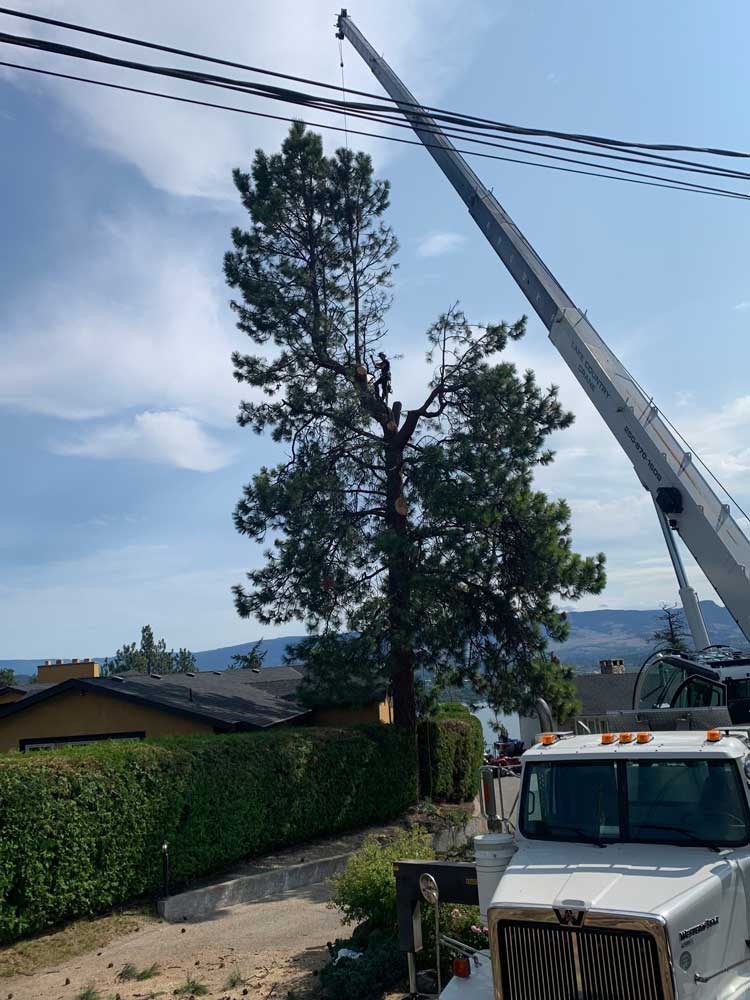
Rigging wins or loses these jobs. A light speedline can pull a limb off a deck without exploding railing posts. A floating anchor, built from a highline or strut, moves weight away from a crumbling gable. When space is tight, a compact knuckleboom or a 35 to 50 ton crane can shorten a dangerous takedown to an hour of pick and swing. Crane work is its own discipline. You need a qualified operator, an arborist who can communicate in hand signals and radios, and a solid plan for cut weights. Guess light, and you shock load the system. Guess heavy, and you never lift. A conservative cut sheet and a scale on the hook can make the difference.
When removal is the only option
Tree Removal Services during an emergency are triage, not landscaping. The target is to remove immediate hazards with the least collateral damage. On a roof punch-through, it is often safer to piecemeal the limb back than to pull it in one move, especially if the roof deck is plywood with water swelling. On a street block, the fastest path might be a front-loader for the big pieces and a follow-up ground crew to sweep and chip later. If a trunk is compromised below grade, and the lean is over critical infrastructure, a full removal proceeds as soon as the site is stable.
Permits can be a friction point. Many municipalities waive or expedite them for dangerous trees documented by a Certified Arborist Consultation. Keep a paper trail, even if it is digital. Photos showing the hazard, a note on why alternatives are not feasible, and a timestamp of communication with the city office all help when questions surface months later.
Pruning as prevention and as repair
After the chainsaws go quiet, a lot of trees remain injured but savable. Tree Pruning & Crown Shaping is where the emergency blends into arboriculture. Reduction cuts can remove high-leverage tips that are likely to fail in the next wind. A lion-tailed interior, whether by neglect or poor past work, sets up whiplash failures. Restoring taper with selective interior growth retention can reduce future risk. Deadwood removal in a tulip poplar over a driveway is not glamour, but one four-inch limb at 12 meters can puncture a hood and a radiator.
I favor conservative reduction, 10 to 20 percent of live crown at most, guided by branch diameter ratios and the species’ response to pruning. Some trees tolerate harder cuts, others sulk or throw weak epicormic shoots. A Norway maple cut too hard will sprout brooms that fail in two seasons. A London plane can take a bit more without protest. A good crew reads the species and the site.
Stabilization with Tree Cable and Bracing
Not every co-dominant leader needs to come down. If the union is sound but under stress, Tree Cable and Bracing can buy years of service life. Dynamic cabling spreads loads and allows movement, while static steel systems arrest motion in a predictable way. You choose based on tree species, target occupancy below, and how much movement the structure can safely tolerate. Bracing rods through a split crotch can stop further shear, but installation quality matters. Holes too close to the union edge, washers that bite into softened wood, or undersized rod stock all set you up for a later failure.
Cabling is not a cure-all. If decay reduces residual wall thickness below safe margins, or if the target zone is a bedroom that sees nightly use, removal becomes the ethical choice. A Certified Arborist Consultation gives the owner a documented rationale, not just an opinion.
Stump Removal & Grinding, the last hazard in the yard
Homeowners often underestimate stumps. A jagged stump at shin height becomes an injury machine once tarps and debris cover it. Stump Removal & Grinding clean up the footprint, destroy tripping hazards, and help with pest management. In some regions, leaving large stumps invites carpenter ants or fungal hosts that can spread to adjacent trees. Depth depends on the next use, 20 to 30 centimeters for lawn, deeper for patios or footings. Be mindful of underground utilities. A good locate service and shallow test pits prevent expensive surprises.
Grinding produces a surprising volume of chips. If you leave them heaped, they compost down and starve the soil of nitrogen for a season. Mix chips with soil, or remove and backfill with clean topsoil to prep for turf or replanting.
FireSmart Tree Services, thinking beyond wind and rain
In fire-prone zones, the emergency comes with a smoke column, not thunderheads. FireSmart Tree Services focus on creating defensible space and modifying vegetation so embers have nowhere to land and kindle. The science is stark. Most homes that burn in wildfires ignite from embers, not direct flame. Lower limbs that ladder fire into crowns, bark mulches that carry heat to siding, and conifers within 1.5 meters of structures are common liabilities.
Work here is deliberate. Raise crowns on large conifers to 2 to 3 meters where feasible. Remove ladder fuels and flammable shrubs close to structures. Choose deciduous trees with high moisture content and wildfire-resilient growth habits for replanting. Clean roofs and gutters, install metal mesh on vents, and keep the first 1.5 meters around the house lean and clean. In wildland urban interface neighborhoods, your choices affect your neighbor’s risk too.
Communicating with insurers and adjusters
A rapid team that documents well saves headaches later. Insurers want dates, times, site conditions, and evidence of necessity. Photographs from multiple angles, a simple sketch showing fall direction and obstacles, and a summary of why Tree Removal Services or stabilization was chosen build a clean claim file. If you tarped a roof, note the materials and measurements. If you coordinated a street closure, log the contact name at traffic control.
Prices vary by region and complexity. A straightforward emergency limb removal from a single-story roof might run a few hundred to a couple thousand dollars, depending on access and size. Multi-story removals with cranes, utility coordination, and night work can reach into the high four or five figures. Being transparent about cost drivers helps clients understand why speed and safety change the price.
The human side of a long day
Storm days stretch. Crew members skip meals, hydration slips, and focus narrows. A tired sawyer is a dangerous sawyer. Good leaders build micro-pauses into the day. A five-minute regroup between cuts resets the plan and lets adrenaline bleed off. Rotate high-skill tasks. The climber who just handled a sketchy negative rig should not be the first up the next spar if another qualified climber is fresh. Simple habits pay off. Spare gloves stay dry under the seat. A second pair of eye protection rides in the left pocket. Ear plugs live on cords around the neck, not in the truck.
Coordinating with the city and neighbors
Traffic control is not an optional accessory. A blocked lane without signage creates secondary crashes. Even in neighborhoods, stand up proper cones and signs, and assign a spotter when machines back into the street. On narrow streets, move the chipper to a driveway apron if the homeowner is willing, or request a short closure from public works. Communication with neighbors saves grief. Knock on the door of the house with the car trapped by your work zone. A two-minute explanation heads off the angry call twenty minutes later.
Tree bylaws often include emergency exemptions, yet they still expect notice. A quick email with photos to the forestry department within 24 to 48 hours keeps your record clean. If wildlife is involved, like an active nest in spring, follow your jurisdiction’s rules. Emergency hazard abatement often supersedes, but you should still document and, when possible, relocate or leave undisturbed any non-threatened wildlife.
Aftercare and long-term resilience
The day after the storm is the real start of recovery. Splintered branch stubs do not seal themselves. Clean pruning cuts reduce infection risk and improve structure. A soil that was compacted by heavy equipment needs relief. Air spade work around root flares, compost and mulch, and careful irrigation through the next dry spell help trees recover. Replanting is not a rush decision. Species choice matters as weather patterns shift. Favor deep-rooted, wind-firm species suited to your soils. Plant with a visible root flare, not too deep, and remove stakes once the tree can stand on its own, usually after a season.
Schedule a follow-up with a Certified Arborist Consultation, ideally within six months. Trees do not show all their storm injuries at once. A delayed canopy thinning or new cracks in included bark unions appear as the growing season reveals stress.
A short homeowner playbook before the next call
Prepared owners shorten emergency timelines and reduce damage. A few small moves now make a difference later.
- Build a relationship with a reputable Emergency Tree Services provider and store their number in your phone. Ask about their response radius and utility coordination. Schedule periodic inspections, every two to three years, for Dangerous Tree Assessment and Removal candidates, plus Tree Pruning & Crown Shaping where structure is weak. Maintain access. Keep side gates functional and wide enough for equipment, and mark septic fields and shallow utilities on a simple sketch. Photograph your trees annually from the same spots. Baseline images help your arborist see changes and help insurers process claims. Reduce fuels near structures with FireSmart Tree Services practices, especially within the first 1.5 meters of your home.
What a seasoned crew looks and sounds like on site
If you want a snapshot test for professionalism, watch the first five minutes. Are cones placed before saws start? Does someone speak with the homeowner or site contact, set expectations, and confirm permission for photos? Is there a brief tailgate safety talk suited to the job, not a generic script? When the saw starts, are ground workers looking up and communicating, or heads-down in their phones?
Good crews are calm in tight spots. They measure twice, cut once, and never let speed bully their judgment. They turn down work that should wait for a utility clearance or more gear. They offer options. Maybe that broken limb can be captured and pruned rather than removing the entire tree today. Maybe a temporary brace can stabilize a split until you decide between cabling and removal. Choice matters, even under pressure.
Edge cases and judgment calls
Some of the hardest calls sit in the gray zone. A lightning-struck pine with a spiral scar, still upright but leaking resin down the trunk, stands over an empty backyard. The wood might be charred and brittle, or the damage might be superficial. You weigh target occupancy, likelihood of internal failure, and the owner’s tolerance for risk. In a high-traffic zone, removal is a clear call. In a low-use area, a monitored reduction with Tree Cable and Bracing might be viable, with a follow-up in six months.
Another edge case is the veteran street tree with heritage status. A hollow plane tree can have more strength than it appears, as long as residual wall thickness stays within safe ratios. Resistograph data and a careful crown reduction can preserve it after a storm. But if the cavity is open, residual wall is thin, and targets are constant, the ethical and legal choice may be removal, with a documented plan to replant and a plaque that honors what stood there for a century.
What you should expect from a proper report
After the dust and chips settle, ask for a clear site report. It should summarize findings, actions taken, recommendations, and maintenance plans. If Tree Removal Services were performed, the report should state why alternatives were not adequate. If Tree Pruning & Crown Shaping or Tree Cable and Bracing were performed, it should outline inspection intervals. For FireSmart Tree Services, a simple map showing zones and recommended vegetation changes is useful. Reports are not just paperwork. They protect you with insurers, guide future maintenance, and help any future owner understand the property’s tree history.
Building a resilient property, one decision at a time
Emergency response is the visible tip. Underneath sits a quieter rhythm of care. Regular inspections catch developing defects before they turn into 2 a.m. Calls. Thoughtful pruning preserves structure instead of pushing growth toward future failure. Cables and braces extend service life where appropriate. Stumps are ground out before they become hazards. FireSmart work transforms a vulnerable home perimeter into a buffer that can save a street when embers fly.
A rapid mobilization Emergency Tree Services team is your partner in the worst hours. The right partner shows up ready, communicates clearly, works safely, and leaves you with more than a cleared driveway. They leave you with a plan, and with choices about how your trees will weather the next season’s tests.
Ace Tree Services Ltd.
Name: Ace Tree Services Ltd.Address: 4656 Wallace Hill Road, Kelowna, BC
Postal code: V1W 4C2
Phone: 250-212-9593
Website: https://acetree.ca/
Hours:
Monday: 7:00 AM - 5:00 PM
Tuesday: 7:00 AM - 5:00 PM
Wednesday: 7:00 AM - 5:00 PM
Thursday: 7:00 AM - 5:00 PM
Friday: 7:00 AM - 5:00 PM
Saturday: 7:00 AM - 5:00 PM
Sunday: Closed
Open-location code (plus code): RHF8+8G Kelowna, British Columbia, Canada
Map/listing URL: https://www.google.com/maps/place/Ace+Tree+Services+Ltd./@49.8232606,-119.4337283,659m/data=!3m2!1e3!4b1!4m6!3m5!1s0x537d8b1d074815c5:0x450b88afa7a41435!8m2!3d49.8232606!4d-119.4337283!16s%2Fg%2F11ydkpnh22
Embed iframe:
"@context": "https://schema.org", "@type": "HomeAndConstructionBusiness", "name": "Ace Tree Services Ltd.", "url": "https://acetree.ca/", "telephone": "250-212-9593", "address": "@type": "PostalAddress", "streetAddress": "4656 Wallace Hill Road", "addressLocality": "Kelowna", "addressRegion": "BC", "addressCountry": "CA" , "openingHoursSpecification": [ "@type": "OpeningHoursSpecification", "dayOfWeek": "https://schema.org/Monday", "opens": "07:00", "closes": "17:00" , "@type": "OpeningHoursSpecification", "dayOfWeek": "https://schema.org/Tuesday", "opens": "07:00", "closes": "17:00" , "@type": "OpeningHoursSpecification", "dayOfWeek": "https://schema.org/Wednesday", "opens": "07:00", "closes": "17:00" , "@type": "OpeningHoursSpecification", "dayOfWeek": "https://schema.org/Thursday", "opens": "07:00", "closes": "17:00" , "@type": "OpeningHoursSpecification", "dayOfWeek": "https://schema.org/Friday", "opens": "07:00", "closes": "17:00" ], "geo": "@type": "GeoCoordinates", "latitude": 49.8232606, "longitude": -119.4337283 , "hasMap": "https://www.google.com/maps/place/Ace+Tree+Services+Ltd./@49.8232606,-119.4337283,659m/data=!3m2!1e3!4b1!4m6!3m5!1s0x537d8b1d074815c5:0x450b88afa7a41435!8m2!3d49.8232606!4d-119.4337283!16s%2Fg%2F11ydkpnh22"
Ace Tree Services Ltd. provides professional tree removal, pruning, stump grinding, emergency response, and arborist consultations for properties in Kelowna and across the Okanagan Valley.
The company works with homes, commercial properties, and municipal settings where tree work needs to be planned carefully around buildings, fences, driveways, landscaping, and other site constraints.
Based in Kelowna, the team is positioned to help nearby neighbourhoods and surrounding Okanagan communities with routine tree care and time-sensitive storm cleanup.
Customers looking for careful tree work often want a crew with certified arborist training, insurance, and a methodical approach to higher-risk removals.
Services also include dangerous tree assessment, cabling and bracing, and wildfire risk reduction tree work for properties that need longer-term planning.
To request a quote or discuss tree care options, call 250-212-9593 or visit https://acetree.ca/.
A public map listing is available to help customers confirm the business location and get directions before a site visit or estimate.
For Kelowna property owners who need pruning, removals, or emergency tree help, a local tree service can make it easier to schedule site-specific recommendations and cleanup.
Popular Questions About Ace Tree Services Ltd.
What services does Ace Tree Services Ltd. provide?Ace Tree Services Ltd. lists tree removal, stump removal and grinding, tree pruning and crown shaping, emergency tree service, arborist consultation, dangerous tree assessment and removal, cabling and bracing, and wildfire risk reduction tree work.
Who does Ace Tree Services Ltd. serve?
The company describes its work as serving homes, businesses, and municipalities in Kelowna and across the Okanagan Valley.
Is emergency tree help available?
Yes. Emergency service is listed for downed or uprooted trees, dangerous tree assessment, stabilization work, and branch cleanup. If a tree is near power lines, the safest first step is to stay clear and contact the utility provider before any tree work begins.
Do I always need a permit to remove a tree?
Not always. Permit requirements can depend on where the tree is located and whether it is near a creek, lake, steep slope, or another protected area. It is best to check local rules for the specific property before removal work starts.
How deep does stump grinding usually go?
Standard stump grinding is typically described as going about 6 to 12 inches below ground level, which is often enough for grass or surface landscaping. Deeper grinding may be possible when site plans call for it.
How much of a tree can be safely removed at one time?
That depends on the species, age, health, and structure of the tree. In practice, good pruning is usually about removing the right limbs for health, clearance, and structure rather than chasing a fixed percentage.
What are common signs that a tree may be dangerous?
Large dead limbs, visible cracks, a new lean, root damage, canopy dieback, or storm-related damage can all be warning signs. Trees near structures deserve extra attention when any of those issues appear.
What is cabling and bracing in tree care?
Cabling and bracing are support systems used to reduce the risk of failure in trees with structural weaknesses that may still be worth preserving. They are generally used to add support, not to replace good assessment and ongoing maintenance.
How do I contact Ace Tree Services Ltd.?
Call 250-212-9593.Website: https://acetree.ca/.
Landmarks Near Kelowna, BC
Downtown KelownaThe downtown core is a practical reference point for lakefront neighbourhoods, mixed-use streets, and central residential properties. If your property is near downtown, tree pruning, removals, and cleanup can be planned around tighter access and nearby structures.
Knox Mountain Park
This well-known park north of downtown is a recognizable landmark for nearby homes and hillside properties. If you are close to this area, ask about tree assessment, trimming, or removal work suited to sloped sites.
Mission Creek Greenway
The greenway runs through several parts of Kelowna and is a useful landmark for nearby residential areas. If your property borders or sits near this corridor, site-specific tree planning is especially important.
Pandosy Village
Pandosy is one of Kelowna’s most recognizable neighbourhoods and a common reference point for south-central properties. If you are nearby, request help for pruning, removals, or storm cleanup around homes and small commercial sites.
Rutland
Rutland is a major east Kelowna neighbourhood with a mix of residential and local commercial properties. If you are located in or near Rutland, tree work can be scheduled for both routine maintenance and urgent situations.
Landmark District
This central business-focused area is a practical landmark for offices, service properties, and nearby residential streets. If your site is near the district, ask about careful tree work around parking, access lanes, and built-up lots.
Kelowna’s North End
The North End sits on the edge of downtown and is a useful reference for nearby homes, industrial sites, and commercial properties. If you are in this part of the city, request tree care based on the layout and constraints of the lot.
Airport District
The Airport District is a recognizable north Kelowna reference point for surrounding properties and access routes. If you are in this area, ask about tree services for residential acreage, commercial sites, or roadside cleanup needs.
Glenmore & Dilworth
These established Kelowna neighbourhoods are useful landmarks for central and north-central service calls. If your property is nearby, pruning and removal work can be tailored to mature trees and established landscapes.
Highway 97 Corridor
Highway 97 is one of the city’s main travel routes and a common way to describe location within Kelowna. If your home or property is just off the corridor, a clear landmark reference can help speed up quote scheduling and site planning.